
|
Summary
Mastering yoga sequencing is about moving from intuition to intention. Treat every class like a lesson plan where every pose serves a specific goal. By grouping postures into families and breaking down complex movements into component parts, you provide students with a clear, safe, and professional roadmap for their practice.
————————————-
Are you an experienced yoga teacher? Ready to become a yoga teacher trainer and train beginner yoga teachers? If so, you may be trying to build your first 200-hour manual and articulate your training methodology. A key component of your teaching methodology is the craft of sequencing.
I’m Rachel Scott, a yoga teacher trainer and an instructional designer, and I help studios and teachers create excellent yoga education programs. One of the biggest hurdles I see for new trainers is moving from intuitive sequencing (what feels good in your own body) to intentional sequencing (developing a system that helps trainees learn).
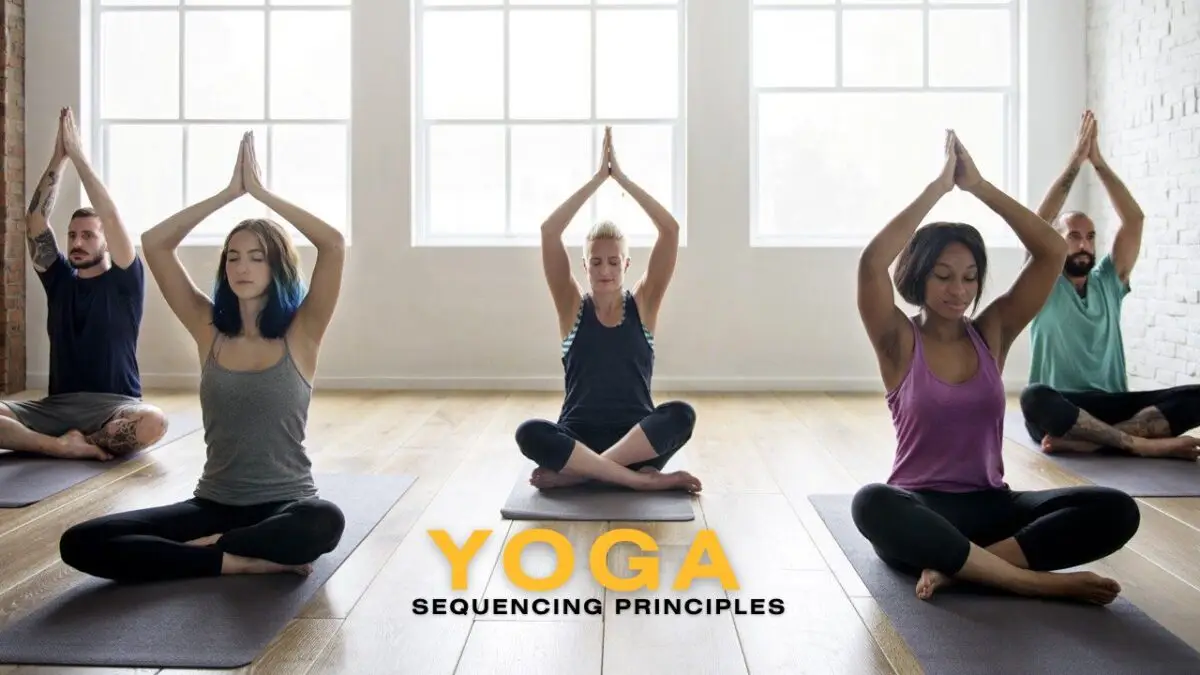
In this blog, I will dive into the core yoga sequencing principles that are often missed in teacher training programs and how you can teach them to your future trainees.
When you teach your trainees, ensure that you are modelling the sequencing style you wish them to teach. I’m a great fan of teaching peak pose sequencing in 200 hour teacher trainings, as it helps trainees to understand the craft of sequencing as it relates to alignment and asana.
When you are designing a class for your teacher trainees, treat each yoga sequence like a physical lesson plan. In peak pose sequencing, if a pose does not help the student reach the goal, take it out (even if it is a fun pose)! Help your trainees understand that a sequence is a roadmap leading to a specific destination.
When you look at a 200-hour manual, you may see a giant list of 50 poses in alphabetical order. While that may not be scary to you, it can be very overwhelming for a beginner yoga teacher! Instead of bunching all the postures together, divide the yoga poses into different families with commonalities.
In my YTT manuals, I categorize postures by their actions and shapes, such as Standing Poses, Backbends, and Active Hip Openers. Why does this matter for yoga sequencing? Because once a trainee understands the core principles of a given posture family, they more easily understand the alignment for every pose in that group.
This is a core part of my 200-Hour Online Yoga Teacher Training, where I use scaffolding to make learning feel like building with blocks rather than diving into the deep end!
It’s not enough to understand the poses generally: to teach a complex pose safely, you must break it down into smaller pieces. I call these component parts.
A component part is a part of the body that must be warmed up or educated to do the pose with optimal alignment. For example, if we looking to practice wheel pose, then we may consider our component parts to include open hip flexors, spinal extension, neutral hips, and shoulder flexion (among others). By progressively warming up the body through the component part logic, your trainees will learn to create safe sequences that will feel good to their students.
When you are training beginner yoga teachers, it’s important to set a distinction between poses that they will need to be able to teach – and poses that are for their personal practice. For example, let’s say that you want your trainees to practice their inversions. While it may be very rewarding and educational to lead your trainees in these poses, you may not want your trainees running out and trying to teach forearm stand immediately after they graduate!
Encourage beginner yoga teacher trainees to focus on foundational poses in their teaching. It is far more important that they are able to teach a simple, clear, and safe Tadasana than a confusing and complicated arm balance.
We spend so much time talking about the poses, but what about the space between them? The transitions are the secret glue of your sequence.
A common mistake in yoga teacher trainings is to neglect educating your students about how transitions impact your sequencing. Transitions determine class style. For example, while a hatha class may have fewer transitions, a flow style class may link many postures together at once. Also, not all transitions are created equal! Some transitions are far more challenging than others. For example, it’s a lot harder to step forward into a lunge from a downward facing dog than to step back to a lunge from the front of the mat. Make sure to discuss transitions explicitly as part of your sequencing. For more tips, check out my other blogs and free resources.
Stepping into the seat of a teacher trainer is a creative and exciting shift. You are not just sharing your love for yoga anymore; you are giving someone else the tools to find their own voice. Teaching your trainees to create safe and intentional sequences is a huge part of helping them to develop confidence and clarity in their own teaching.
If you are feeling a bit stuck on how to organize all this info in your manual, you don’t have to go it alone! I have spent years building high-quality editable teacher training materials so that you don’t have to start from scratch. Check out my buy a yoga teacher training curriculum or explore my other lesson plans to get a head start.

Rachel supports yoga teachers and studios around the world to create transformational education experiences that help them thrive in their business, share their passion, and inspire more people to practice yoga. Her extensive knowledge and experience include: earning two masters degrees, authoring three books, leading 4,000+ hours of TT, building a teacher training college for a national yoga company, and working behind the scenes in yoga studio & teacher management for more than fifteen years. As a writer and speaker, she continually wrestles with the juicy bits of life: relationships, authenticity, and discovering meaning in this crazy, wildish world. E-RYT 500, YACEP, BA, MFA, MSci. Learn more about Rachel.

Leave a Reply