
|
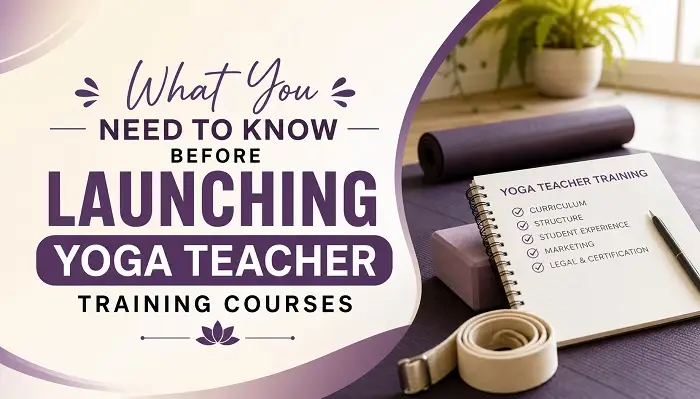
Summary: Launching a yoga teacher training course is an exciting step forward for your business and teaching mission! To create the best experience for your students, your program requires leadership, structure and excellent course materials. Creating everything from scratch can be overwhelming; getting support from a proven system can help you to save time, reduce stress, and launch your program with confidence.
You have been teaching public classes for years. But now you are feeling the call to take your career and skills one step further by launching a yoga teacher training program. Creating your own school is an exciting prospect – but a little bit overwhelming, too! You may think you are ready, but are also wondering what it really takes.
Hello! I’m Rachel Scott, a yoga educational consultant, and in this blog, we will discuss a few things you should know that can save you time, stress, and a lot of second-guessing as you move forward as a yoga educator.
Let’s dive in!
Launching a YTT program is no minor matter! Here is why it is actually a big deal:
1. You are Shaping Future Teachers: A YTT is not just another class. When you run a training, you help create new teachers and participate in the lineage of the yoga tradition. You want to ensure that you are setting your students up to carry the yoga tradition forward with integrity.
2. It Changes Your Role: Being a yoga teacher trainer requires you to step into your own skills as a leader. Facilitating a training is different from teaching a class; you must manage group dynamics and create a safe space for your trainee’s transformation.
3. It Can Grow Your Business: A 200-hour training program can generate a steady income that helps you develop financial resilience. YTT’s also help you build a strong community around your work.
You want to launch a 200-hour training for yoga teachers, but are wondering: “Am I ready?” Let’s look:
1. You Have Teaching Experience: You have been teaching for several years and have a strong knowledge base. You are clear about your own teaching skills and methodology and passionate about sharing your teaching.
2. You Enjoy Helping Others Grow: A passion for mentorship matters more than perfect knowledge. A trainer must have some emotional IQ and be willing to be of service to the needs of their students.
3. You Are Willing to Learn Along The Way: You do not need to know everything to start your school (in fact, waiting for “perfect knowledge” will get in the way!). However, you do need to recognize that leading a YTT will call upon you to deepen your own skills and knowledge to rise to the call. Not knowing everything is normal. But we do want to have a healthy desire to learn and a willingness to say, “I don’t know…yet!”
4. You Are Open to Support: You don’t have to go it alone. Think of yourself as a CEO; delegation helps you to get the best work done most efficiently. Getting the right kind of help makes everything easier.
5. You are Feeling the Call. No one is “ready” to create and lead a yoga teacher training. That’s what makes it such a powerful opportunity for our own development (and what makes us feel excited – and scared!). But if that small voice is whispering to you that this is the right next step, then it’s time to listen.
1. A Full Curriculum: You need more than ideas and a student manual. Your training needs to include lesson plans that describe how you will coordinate all 200-hours of your program (these classroom hours are where the learning really happens). Your curriculum should include anatomy, philosophy, and teaching skills. (I offer online materials for your YTT in case you want to off-load some of your classroom hours into the online space easily.)
2. Clear Lesson Plans: Each session with your trainees needs structure and clear learning objectives. You can’t just “go with the flow” here, as you will often get pulled down rabbit holes. While rabbit holes aren’t always bad, you need to have a clear training structure for your students so that you can guide them to become skilled teachers. 200-hours isn’t a long time; it needs to be mapped strategically.
3. Student Materials: Clear and well-organized manuals, worksheets, and (possibly) online resources that help your students recall key information, integrate important concepts, and learn more easily.
4. Assessments: Clear and detailed assessments are essential in a certification program to ensure that your students are making the most of their educational experience. Not only do you need final assessments for the end of the program, it’s helpful to have assessments along the way so that you can assess student progress and adjust as needed.
If this seems like a lot, don’t worry! Remember, you don’t have to go it alone. You can purchase individual lesson plans, get coaching, or buy a 200-hour teacher training that aligns with Yoga Alliance’s standards.
1. Writing Takes Longer than You Think: Creating a full 200-hour training means creating a lot of course content. It’s not just the student manual (which is actually fairly easy to create); it’s the lesson plans.
2. Planning Every Detail: You need to map out each hour of training and ensure that you teaching what needs to be covered in an effective sequence. What will you teach first? What comes next? It takes time to get it right. Also, ensuring that your hours align with Yoga Alliance standards (or your registration body of choice) can be time-consuming.
3. Editing and Improving: Your first draft won’t be perfect. Refining and editing can take months.
4. Balancing Teaching/Studio Management and Creating: I tell my partners: if you had unlimited time (and didn’t have to run your studio, teach regular classes or – heavens forfend – have a personal life), you could certainly create a wonderful YTT. However, it may take you 6 month to a year. Why not spend your timing revising/adapting rather than creating everything from scratch?
This is exactly why I offer editable and brandable lesson plans. I have seen so many aspiring teacher trainers stall out after a year – with little to show for it. Instead of spending a year building everything, you can start with a complete system and adjust it to fit your voice. This kind of investment can save you time and get you launched earlier. Having professional materials can reduce stress. And – most importantly – you still get to make the program your own.
1. Follow a Clear Framework: A 200-hour training includes key areas like teaching methods (cueing and sequencing), applied anatomy, practice, ethics, business and philosophy. Keeping a clear structure for all these topics helps your students stay on track.
2. Break it into Modules: Don’t try to teach everything at once. Divide your training into simple sections. Start simply and build in complexity. Chunking your content into smaller sections makes learning easier for you and your students.
3. Keep Lessons Simple and Clear: Keep the end in mind: your students are learning to teach. They need clear steps and practice, not complexity. Focus on your students’ performance and repeat key principles.
4. Stay Organized: Having a structured plan helps you feel calm and prepared. The need for organization is where using an established curriculum can really help. You can rest easy knowing that you have a clear and proven roadmap.
All this said: you can absolutely create your own yoga teacher training course. And in fact, I’d be happy to help you do it. But you don’t have to do everything from scratch. With the right structure and support, you can launch your school more quickly and with confidence. Check out my other blogs to get valuable insights about my lesson plans and courses for studios and yoga teacher trainers. Happy creating!

Rachel supports yoga teachers and studios around the world to create transformational education experiences that help them thrive in their business, share their passion, and inspire more people to practice yoga. Her extensive knowledge and experience include: earning two masters degrees, authoring three books, leading 4,000+ hours of TT, building a teacher training college for a national yoga company, and working behind the scenes in yoga studio & teacher management for more than fifteen years. As a writer and speaker, she continually wrestles with the juicy bits of life: relationships, authenticity, and discovering meaning in this crazy, wildish world. E-RYT 500, YACEP, BA, MFA, MSci. Learn more about Rachel.



Leave a Reply