
|
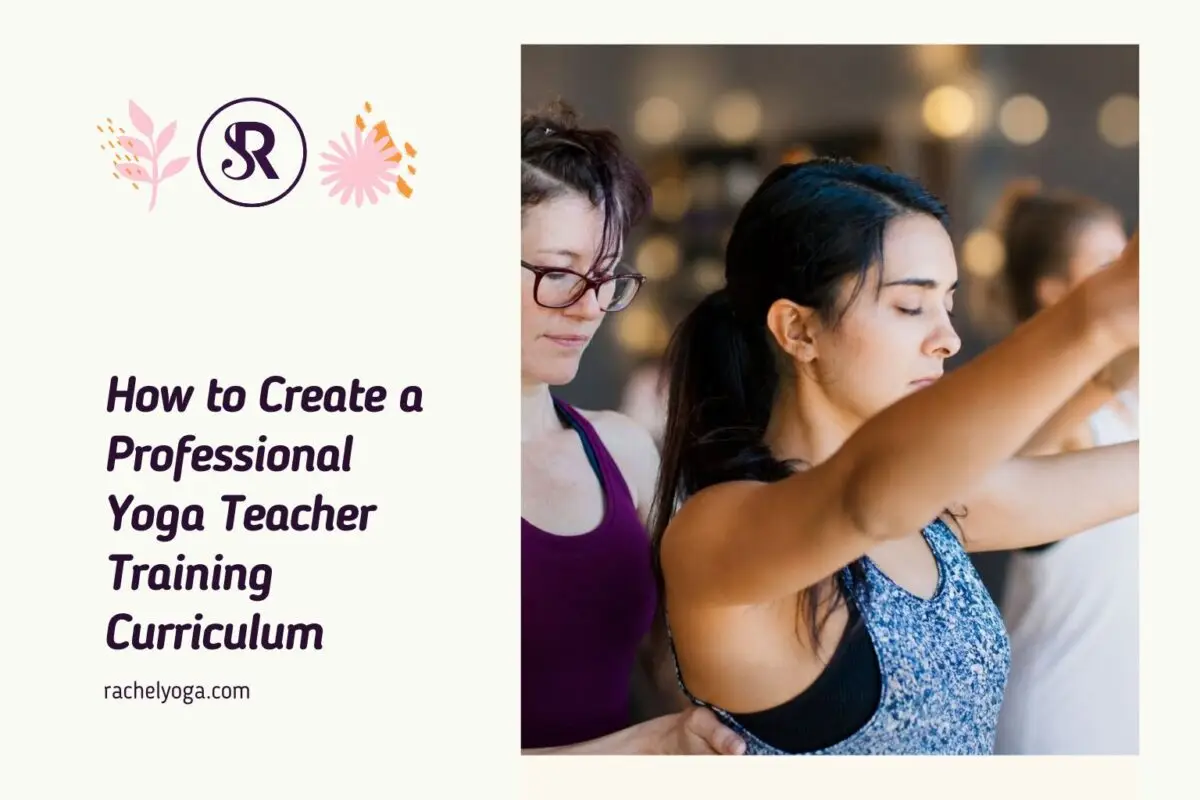
Summary: Thinking of developing a professional yoga teacher training curriculum? Creating your own YTT is an exciting (and sometimes a wee bit daunting) project! If you are new to designing education, managing a full 200 hours can feel like a dive into the deep end. But with some brainstorming and preparation, you can create a professional YTT curriculum that serves your students, elevates your community, and helps you share your gifts.
Remember when you got your student manual on the first day of your training? If you were of the generation of 3-ring binder manuals, there was nothing quite as satisfying as holding that manual in your hands and feeling the literal weight of what you were to learn! A well-designed manual helps organize content, clarify thinking, link important ideas, and provides a powerful reference guide for learning. So when you step to the “other side of the fence” and think about developing your own curriculum, it’s common to think you should focus on the student manual. However – and this may surprise you -, the student manual is the last element that you should develop in your curriculum design process.
To develop a professional and well-designed program, you will need to broaden your scope and think about the learning journey as a whole. A 200-hour yoga teacher training includes much more than just a student manual; you will need to think about your program objectives, assessments, lesson plans (activities), and visual and tactile resources. Let’s look at these one at a time.
When you start creating your yoga teacher training program, the first step is to ask yourself: “What do I want my students to be able to do at the end of this yoga teacher training program?” This may seem like a simple question with a simple answer: I want them to teach yoga well! However, when you dive a little deeper and ask, “How will I know that they are teaching yoga well?” you’ll find that the answer to this question is more complex. You could also ask: “What do I need to see them DO to know that they have acquired the necessary teaching skills from this experience?” Not only does creating learning objectives help you clarify your own training goals, but this process also allows you to determine your program’s unique values and style. Some yoga teacher training programs focus on philosophy, others on anatomy, others on the subtle body. Crafting your yoga program’s learning objectives is the foundation upon which the rest of your yoga curriculum will be built.
Once you have determined your learning objectives, it’s time to create your assessments! Assessments are usually the last element to be designed, but really they should be the second. They need to align and support your learning objectives. For example, if your learning objective is: “students will be able to design a well-structured 1-hour vinyasa class in the peak pose sequencing style,” then your assessment should clearly be “students will submit a well-structured 1-hour vinyasa class in the peak pose sequencing style!” By creating your assessment (or at least a rough draft of it) early, you have now created the frame for your training. You know where the journey needs to take you.
The beating heart of a professional YTT curriculum is its lesson plans. A lesson plan is a roadmap for how you will use your time to take your students on a journey from point A to point B. Look at your learning objectives and ask: what lectures, activities, worksheets, and discussions do I need to have to get my students from where they are starting (day 1 of your training) to the final assessment successfully? Keep in mind: a lecture may be a good starting point for information, but learning to be a yoga teacher requires extensive practice and feedback. Get your trainees on their feet and teaching from day 1.
Now, at last, we consider what resources will be helpful to support the learning journey. Here is where you may consider: presentations, online videos, worksheets, and your student manual. Now that you know what your learning journey includes, you can most effectively create the supporting tools that will be of most service to your students.
Developing a professional yoga teacher training curriculum is an exciting opportunity to clarify your training’s value and design a meaningful learning experience for your trainees. By following the most efficient order of operations and creating your learning objectives first, you will ensure that you are developing a cohesive, effective, and well-structured YTT program. For assistance in developing your program, check out my wide array of resources designed to help you shine! Or book a free chat with me to help you get started.

Rachel supports yoga teachers and studios around the world to create transformational education experiences that help them thrive in their business, share their passion, and inspire more people to practice yoga. Her extensive knowledge and experience include: earning two masters degrees, authoring three books, leading 4,000+ hours of TT, building a teacher training college for a national yoga company, and working behind the scenes in yoga studio & teacher management for more than fifteen years. As a writer and speaker, she continually wrestles with the juicy bits of life: relationships, authenticity, and discovering meaning in this crazy, wildish world. E-RYT 500, YACEP, BA, MFA, MSci. Learn more about Rachel.

Leave a Reply