
|
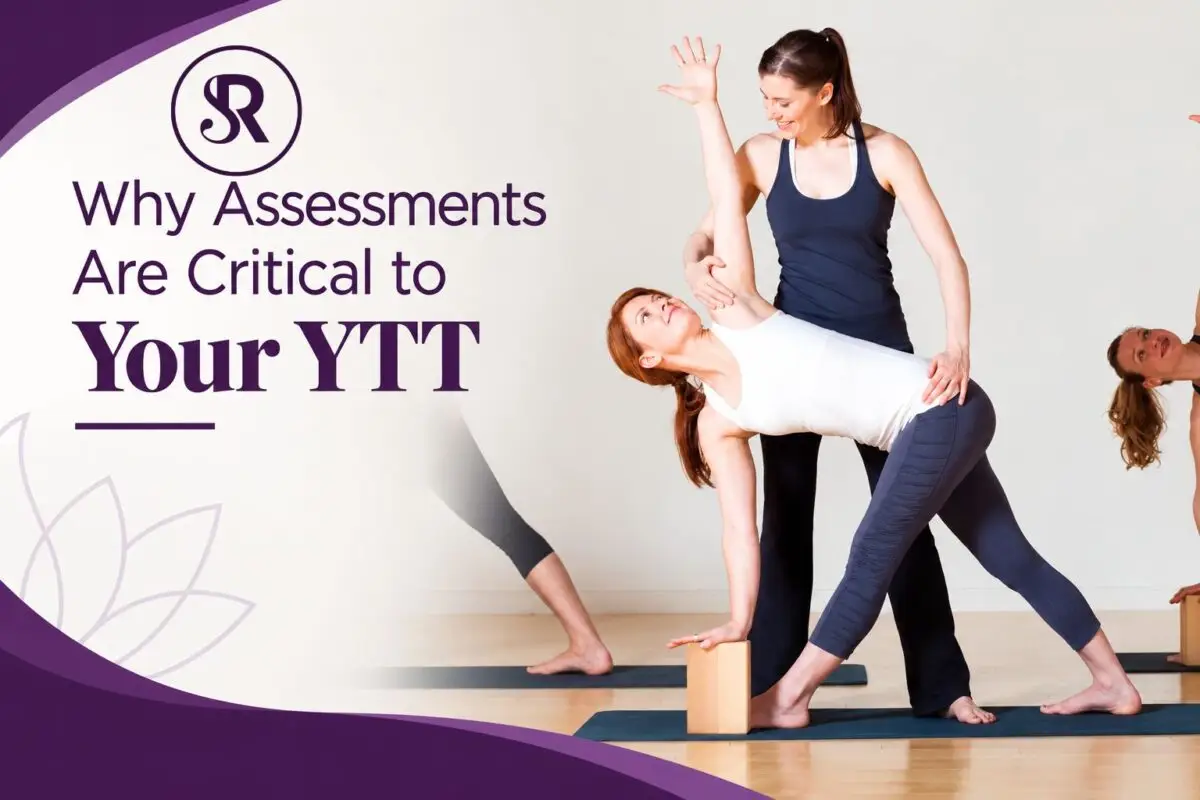
Summary: Assessments are essential to a successful yoga teacher training. Assessments can show whether trainees can apply what they have learned. Practical evaluations, assignments, quizzes, teaching demonstrations, and feedback can help to identify learning gaps, build confidence, and improve teaching skills. Regular assessment also helps trainers strengthen their curriculum and ensure students are genuinely prepared to teach.
Here is a question for teacher trainers: are you actually assessing your yoga teacher trainees or simply hoping your trainees can teach by the time the training ends? For example, you have built a beautiful 200-hour YTT. You have your student manual, curriculum, and schedule. You have lesson plans developed in anatomy, sequencing, philosophy, and teaching methodology.
But how do you know they can actually use what they have learned? This is where assessments come in. Without well-crafted assessments, all the wonderful work to create your yoga teacher training can be undermined.
Assessment is the process of finding out whether your students have developed the knowledge, skills and attitudes that are required by the end of the training. Assessment formats might include written assignments, quizzes, teaching demonstrations, sequencing projects, observation exercises, student reflections, or practical exams.
The important thing is that assessment should connect directly to your learning objectives. If you tell students they will learn how to cue using direct language, teaching from the ground up, addressing common misalignments…then you need to assess them on exactly that! effective class, then you need to ensure that they can actually teach.
Your curriculum should have robust, clear learning objectives (see my blog on learning objectives if these are new to you!). Assessments provide the essential opportunity to determine if your students are meeting them. Without assessments, you are measuring attendance – not learning.
Here is one of the biggest advantages of assessments: they help you catch gaps in understanding early on. A student who struggles with sequencing can receive additional practice and feedback. A student who misunderstands alignment can get clarification before teaching independently. Without a feedback loop, trainers can all too easily assume that understanding is progressing without a hitch. This error can be exacerbated because the students who “get it” to speak up, while students who are struggling may stay quiet. If we simply ask, “are there any questions” or “is this clear,” we’re not really get accurate information.
Sometimes I hear trainers argue that testing just makes students nervous. While I can appreciate that test taking can be stressful, this is usually because the tests are unfamiliar, improperly designed, or too complicated for the teacher training moment. Properly designed assessments won’t terrify your students, but will actually help them to develop their confidence in their skills. Well-designed assessments will leave your trainees thinking, “Wow, I’m getting it!”
Assessments are not just for evaluating students: they inform us as to whether our YTT curriculum is working. If most students are struggling with the same concept, the problem is not with the students but with the teaching. It’s great feedback for us that we may need to reorganize our materials, provide a better explanation, or include more teaching time.
A strong YTT should develop competent teachers who are teaching in your unique teaching style. Assessments help you create a more intentional program because they allow you to ask an important question: “What should one of my trainees actually be able to do after the training ends?” Once you answer that question, your curriculum, assignments, practice sessions, and faculty teaching can become much more focused. Not only does this process improve the quality of your teaching, but it also helps you define what makes your training program unique.
You don’t necessarily need to assess everything your students encounter. For example, you may include some interesting modules on Ayurveda that are not really critical for your graduates. Instead, identify the competencies that matter most for your students.
Not all assessments are multiple choice exams.
To create an effective YTT assessment, start with your learning objectives. Ask: How will I know that the student has achieved this? Be specific and measurable. Then choose an assessment method that makes sense.
The biggest mistake is treating assessment as an afterthought. Assessments are a critical component of the learning feedback cycle.
Another common problem is relying entirely on written tests. While tests can measure knowledge, they cannot measure skills.
And finally, don’t offer one big assessment only at the end of your training (that’s a surefire recipe for trainee stress); build small assessments progressively throughout your training Small check-ins, practice teaching, assignments, peer feedback, and instructor evaluations can give students multiple opportunities to learn and improve.
Your YTT is not just a collection of lectures, manuals, and teaching hours. It is a designed pathway to develop yoga teachers. Proper assessments help ensure that each step along the way is being met. Assessments provide valuable feedback, support YTT clarity, and help build your students’ confidence. So, before you finalize your next YTT curriculum, ask yourself one simple question: “How will I know my students are ready to teach?” If you don’t have a clear answer yet, book a free chat with me. I am ready to help 🙂

Rachel supports yoga teachers and studios around the world to create transformational education experiences that help them thrive in their business, share their passion, and inspire more people to practice yoga. Her extensive knowledge and experience include: earning two masters degrees, authoring three books, leading 4,000+ hours of TT, building a teacher training college for a national yoga company, and working behind the scenes in yoga studio & teacher management for more than fifteen years. As a writer and speaker, she continually wrestles with the juicy bits of life: relationships, authenticity, and discovering meaning in this crazy, wildish world. E-RYT 500, YACEP, BA, MFA, MSci. Learn more about Rachel.



Leave a Reply