
|
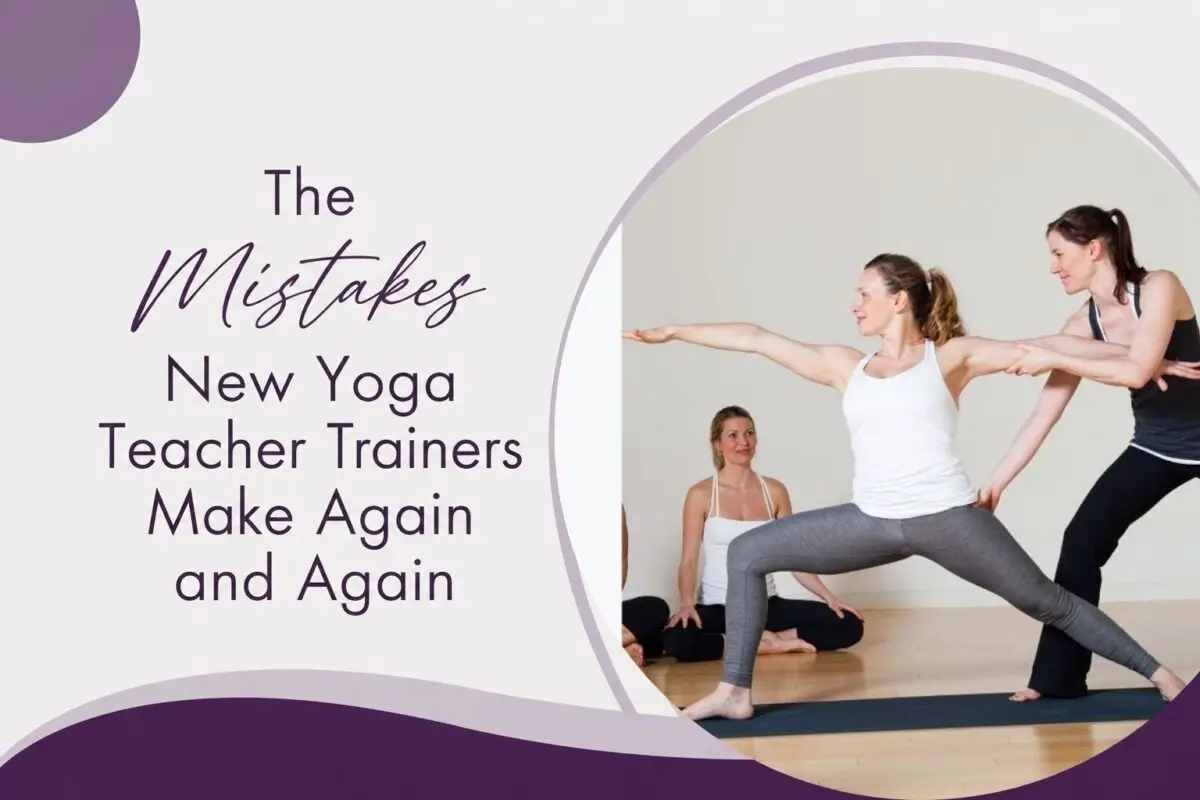
Summary: Every new yoga teacher trainer has a learning curve. I certainly did! Looking back, most errors stemmed from a desire to give my students the very best experience possible. These “well-intentioned” mistakes have taught me the most. Fortunately, most of them are easy to avoid! If you are preparing to lead your first yoga teacher training, here are some tips to help you out.
Leading your first yoga teacher training is a little like teaching your very first yoga class. You prepare, you organize, and you genuinely want to give your students the best experience possible. At the same time, you will quickly discover that teaching teachers requires a very different set of skills than teaching your weekly yoga class.
Hello! I’m Rachel Scott, an instructional designer with over 15 years of experience helping studios and trainers to launch their own YTT’s. I remember leading my first 200-hour and thinking that if I shared everything I knew, my students would graduate as excellent teachers! However, experience has taught me that being an excellent yoga teacher trainer is not about knowing more than everyone else in the room; it is about creating an environment that fosters practice, feedback, and resilience.
When we first begin leading teacher training, many of us will feel the pressure of imposter syndrome! Do we know enough? Do we have enough experience to really lead a training? We want students to feel they are getting a great value for their money, so we may feel tempted to share every interesting story, every philosophy discussion, and every anatomy detail we have collected over the years!
Ironically, this well-intentioned desire usually works against us.
Students do not leave a training session remembering how much their trainer knew – or caring that they were impressed by our knowledge. Trainees will feel that they have gotten great value if they can recognize changes in their own skills and behavior. As trainers, our roles aren’t to demonstrate our expertise, but create a space where our trainees can develop theirs. If you find yourself trying to cover a lot of material, ask yourself:
“What do my trainees actually need to be able to do after this lesson?”
This may seem like a simple question, but the answer will transform the way you lead your training.
Most of us became trainers because we enjoy teaching. I love being a trainer because it lets me dive deeper into all aspects of yoga with a group of enthusiastic peers! However, integrated learning does not happen through lecture alone. Some of the best moments in teacher training happen when the trainer steps back and allows the students to discuss, experiment, practice – and even struggle a little to figure something out.
As a YTT trainer, I now build opportunities for participation and engagement from students throughout the day. Candidly, I want to “do less” so the students “do more.” Integrate activities, discussions, and participation throughout each lesson. Have trainees reiterate concepts and apply new ideas immediately. Relate any theory to actual practice and teaching. By creating ongoing opportunities for participation, you will help your trainees integrate information in real time.
At the beginning of a training, I often hear, “I don’t feel ready to teach.” Some of your trainees may want to wait til they feel like they have a lot of information to jump in front of the class and teach a pose – but this is a mistake.
The truth is that confidence in teaching is developed through actually teaching – not through preparing to teach. Get your trainees cuing postures from day one. You can start very simply (even just trying to give the position of a posture is enough!), but it’s important to get them out of the heads and into the fray as soon as possible. These small teaching experiences build confidence gradually. Teaching is a skill that develops through repetition, not observation or contemplation.
One thing I have learned after leading many teacher trainings is that no two groups are alike! Some cohorts ask endless questions, while others prefer quiet reflection. Some love anatomy, while others are drawn to philosophy. Every group develops its own personality.
One mistake many new trainers make is expecting every cohort to respond and learn exactly the same way. A yoga lesson plan is important, but it should never become so rigid that it cannot respond to the people sitting in front of you.
As a trainer, it’s important to pay attention to the room.
Taking your time and learning to read the room is one of the most valuable skills you can develop.
Here’s one that I really had to learn!
One of your most important jobs as a trainer is to give clear, measurable, specific feedback. However, it’s also vitally important that you titrate how much feedback you give. As trainers, we notice everything – and we want to be good trainers and give our trainees lots of good information! However, new trainees can only absorb so much feedback at one time. When I first started, I often tried to correct every issue I noticed, which led to overwhelm.
When you give feedback: choose one or two priorities. Perhaps today’s focus is vocal clarity, volume and tone. Tomorrow you may focus on body language. The following day, you may focus on how your trainees passive language and crutch words. By narrowing the focus of your feedback, you can support your trainees to make steady progress without feeling overwhelmed. Good feedback should build confidence while encouraging improvement.
One temptation for every new yoga teacher trainer is to introduce advanced concepts too early. While it can be exciting to discuss complex anatomy, subtle philosophy, or advanced sequencing, students first need to focus on the basics. Before exploring advanced techniques, make sure your trainees can confidently:
Strong teachers are built on consistent fundamentals. This is one reason I place so much importance on a well-designed 200-hour yoga teacher training curriculum before expanding into more advanced studies.
One of the biggest lessons I learned while studying instructional design is that people rarely learn by listening alone. They learn through doing. Whenever possible, build activities that require your trainees to think, discuss, observe, solve problems, and teach.
For example:
These experiences create much deeper learning than another lecture alone. It is one reason I invest so much time creating interactive yoga lesson plans and yoga teacher training materials that actively involve students throughout the learning process.
One of the joys of becoming a yoga teacher trainer is realizing that you never stop learning. Every training teaches me something new. Sometimes I get inspired by a student’s thought-provoking question, another time, I may get excited by designing a more engaging activity. Sometimes it is realizing that a lesson I have taught for years could be explained more simply.
The best trainers I know continue to refine their programs, review their materials, and stay open to new ideas. That willingness to keep growing benefits both the trainer and the trainees. Every experienced teacher trainer was once leading their very first training. We all make mistakes – I certainly did.
The important thing is not trying to create the perfect program on your first attempt. Instead, focus on helping your trainees become safe, thoughtful, and confident teachers. Teach less and reinforce more. Give your students opportunities to practice from the very beginning. Be willing to adapt to each group you teach.
Remember that your success is measured by what your trainees are able to do when they leave your training—not by how much information you managed to cover.
If you’re developing your first teacher training or refining an existing one, explore my student manuals, 300-hour yoga teacher training, and other yoga teacher training materials. I also love supporting fellow trainers, so feel free to book a free chat if you’d like to discuss your program.

Rachel supports yoga teachers and studios around the world to create transformational education experiences that help them thrive in their business, share their passion, and inspire more people to practice yoga. Her extensive knowledge and experience include: earning two masters degrees, authoring three books, leading 4,000+ hours of TT, building a teacher training college for a national yoga company, and working behind the scenes in yoga studio & teacher management for more than fifteen years. As a writer and speaker, she continually wrestles with the juicy bits of life: relationships, authenticity, and discovering meaning in this crazy, wildish world. E-RYT 500, YACEP, BA, MFA, MSci. Learn more about Rachel.

Leave a Reply