
|
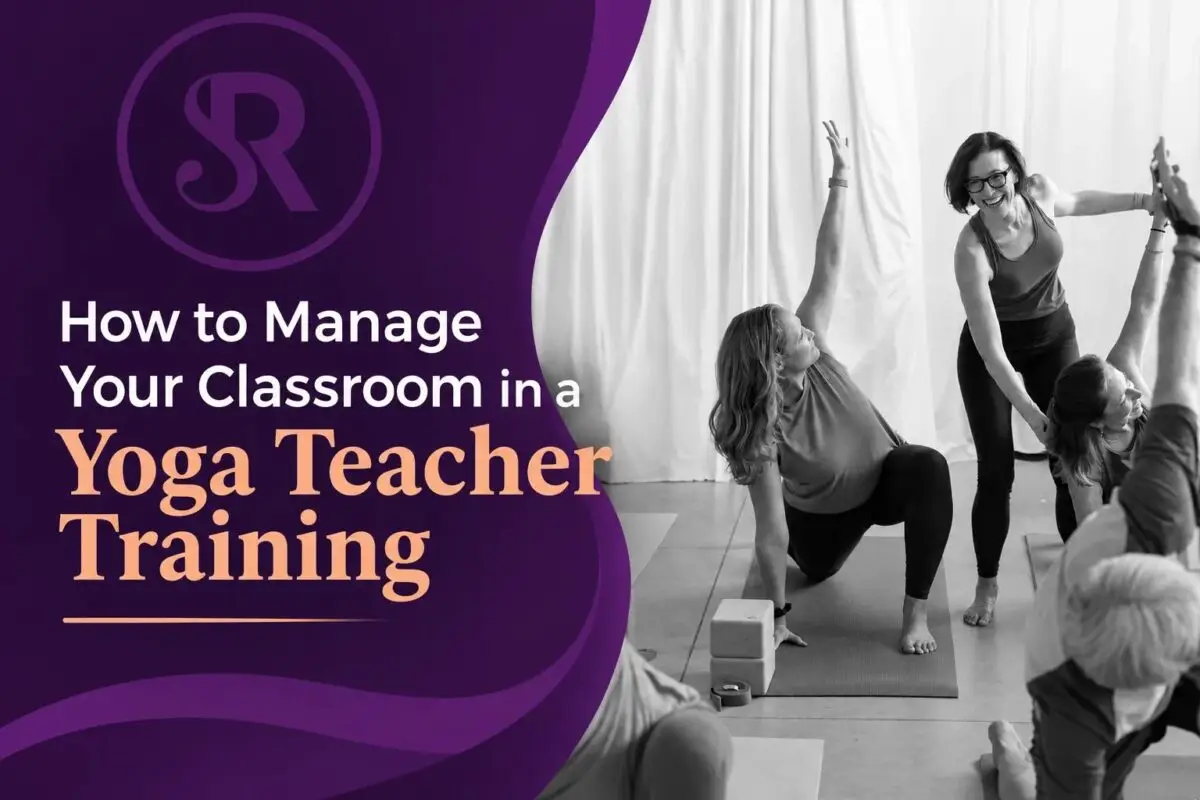
Summary: Nothing can derail a well-planned YTT like a disordered learning environment. Managing the classroom environment includes establishing clear expectations, acknowledging disruptive and late students, and proactively managing participation. Positive learning environments, respectful communication, structured participation, and yogic principles help you create a supportive classroom environment.
You have planned a beautiful yoga teacher training, created a thoughtful curriculum, and prepared your teaching materials. All the pre-planning has been done. Now comes the tricky part: creating your classroom environment. In a YTT, you will be facilitating a space that could include a lot of different personalities. Trainees will have different levels of self-awareness and self-regulation skills, as well as communication styles; you may have trainees who love talking, hate talking, love leading, hate leading, lead with confidence or seem wildly insecure. Our task as a trainer is to support our trainees and meet each one where we can best support their needs and growth. And all this while managing our time effectively!
Here is a pro tip: creating a great learning environment does not begin when your student disrupt your lesson; it begins when you start your YTT program. On the first day of the training, I devote dedicated time for the training group itself to create their own expectations for the behaviors they want to foster. This brainstorm can include logistical considerations (punctuality, use of phones, etc.) as well as emotional guidelines (supporting each other, creating an environment for exploration rather than judgement, etc.). When teaching adults, I am not a fan of leading with a rule book; I’d rather have the group itself set its own expectations and feel accountable to each other. (That said, there may be written established policies for behaviors around harassment, etc. that are non-negotiable.)
At the same time, I set clear expectations for assignments and attendance. Deadlines and consequences are established immediately in order to ensure clarity.
Here’s another pro tip: set an expectation at the beginning of the training that your trainees will be learning to step into the seat of the teacher. As a teacher, one needs to be able to regulate oneself and create a positive practice space. If interpersonal challenges arise during the program, it can be helpful to remind everyone that we are not just learning how to teach postures, but how to behave as a yoga teacher.
You will get a lot of different personalities in a yoga teacher training (and hurray for that!). Let’s look at the most common situations you might encounter during your teacher training.
Before we dive into challenges, remember: lead with love. Each student has chosen to participate in your training and has a reason for being there. Your first responsibility as a trainer is to regulate yourself so that you can support your students and respond with compassion and patience. Your role as a facilitator is to protect the group space and group experience, not react impulsively. See the good first.
Some students love to process through talking. They may be the student who hates silence and leaps to answer all questions, or always has something to add to the conversation. Recognize that this is usually a form of processing and a learning style – not grandstanding. I recommend having students reflect on their own personal habits at the beginning of the program and inviting them to “antidote their tendencies” during the program. If a student can recognize that they are speaking continually, it can be a helpful exercise for them to learn to practice silence and allow others to step forward.
Other tips:
When a trainee sits quietly, they may be struggling or thoughtfully observing. Many often worry about giving the wrong answer or teaching in front of their peers. Most introverts are aware they may not love speaking up. Again, you can ask students to “antidote their tendencies,” by piping up in advance of their typical comfort zone. Other ways to encourage quiet students:
Ask quieter students questions directly when the answer is an opinion (in other words, they can’t get the answer wrong, so you’re not putting them overly on the spot). For example, “Alex, what do you think felt challenging about that class?”
Students are sometimes late. Unexpected scheduling issues happen to everyone and the occasional lateness is not a problem. But what if the same student keeps arriving late regularly?
This is where having clear policies is so helpful. In your attendance policy, I strongly suggest having a caveat about lateness as well. For example, “if a student is ten or more minutes late three times, it will be considered an absence and require a private make up session.” In other words, craft a policy that acknowledges that “life happens,” but also gives you written recourse if you have a student who is consistently tardy. Also, keep in mind that timeliness is a skill and often just a habit that needs cultivating. And it’s a professional skill that will be important for your trainees to have as teachers. By supporting any habitually late students to wrestle with their own tendencies, you will be helping them develop better professional habits.
A yoga teacher training is not just about physical instruction. Just as yoga is more than a physical practice, a yoga teacher training includes a connection to a profound spiritual tradition. Explicitly incorporating yogic principles of mindfulness and compassion into your yoga teacher training helps to create real leaders. By anchoring classroom management in principles such as compassion, truth, and non-grasping, you will not only create a lovely learning environment, but also help your trainees recognize how they can live their yoga in real life situations.
Reframe your role: you are not “managing a YTT classroom,” you are “facilitating” an environment for transformation. When you are working with adults, you do not need to be a rule maker, but rather a steward of the learning space. Setting clear boundaries and guidelines that support this environment is simply about creating clarity for the sake of the group – not about putting ourselves in a position of power. Invite everyone to play an active role in crafting a positive learning environment and your training will become an opportunity to foster leadership as well as learning.

Rachel supports yoga teachers and studios around the world to create transformational education experiences that help them thrive in their business, share their passion, and inspire more people to practice yoga. Her extensive knowledge and experience include: earning two masters degrees, authoring three books, leading 4,000+ hours of TT, building a teacher training college for a national yoga company, and working behind the scenes in yoga studio & teacher management for more than fifteen years. As a writer and speaker, she continually wrestles with the juicy bits of life: relationships, authenticity, and discovering meaning in this crazy, wildish world. E-RYT 500, YACEP, BA, MFA, MSci. Learn more about Rachel.



Leave a Reply